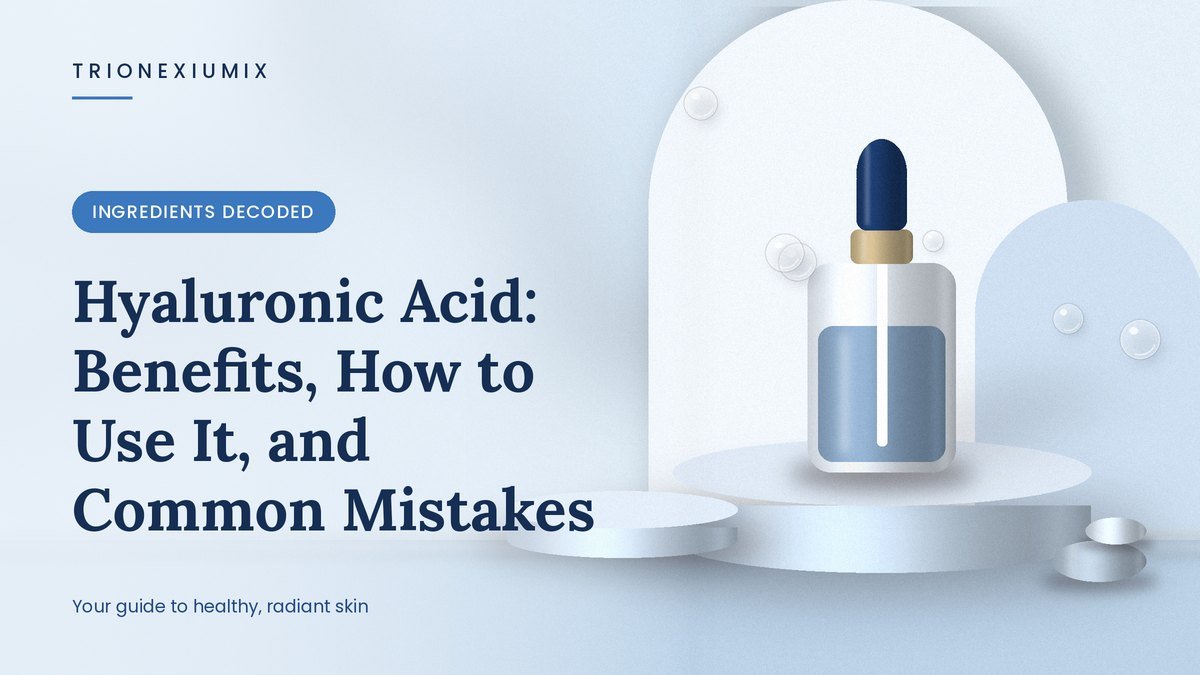
Hyaluronic Acid: Benefits, How to Use It, and Common Mistakes
Hyaluronic acid hydrates and plumps skin, but only when used correctly. Learn its benefits, how to apply it, which skin types it suits, and common mistakes to avoid.
Hyaluronic acid is one of the most popular skincare ingredients in the world, and for good reason. It's gentle, suitable for nearly every skin type, and delivers noticeable hydration. But there's a right way and a wrong way to use it.
Here's what hyaluronic acid does, how to choose a good product, and the most common mistakes to avoid.
What Is Hyaluronic Acid?
Despite its name, hyaluronic acid isn't an exfoliating acid. It's a sugar molecule (a glycosaminoglycan) that your body makes naturally. It's found in your skin, joints, and eyes, where it helps retain moisture and keep tissues cushioned.
Hyaluronic acid is a humectant, meaning it attracts and holds water. It's often said to hold up to 1,000 times its weight in water. In skincare, it's commonly listed as hyaluronic acid or sodium hyaluronate, a salt form that's often used in formulas.
Why Your Skin Needs Hydration Help
Your skin's natural hyaluronic acid levels decrease with age and can be affected by sun exposure. Dehydrated skin can look dull, show fine lines more clearly, and feel tight. Topical hyaluronic acid helps by drawing water into the outer layers of the skin.
Benefits of Hyaluronic Acid
- Deep hydration: Attracts water to the skin's surface layers.
- Temporary plumping: Hydrated skin looks fuller, which can soften the look of fine lines.
- Smoother texture: Helps rough, dry areas feel softer.
- Suitable for most skin types: Lightweight and rarely irritating.
- Pairs well with other ingredients: Works alongside most actives.
Types of Hyaluronic Acid
Hyaluronic acid comes in different molecular weights:
| Type | Size | What It Does |
|---|---|---|
| High molecular weight | Large | Sits on the surface, forms a hydrating film |
| Medium molecular weight | Medium | Hydrates the upper layers |
| Low molecular weight | Small | May penetrate a bit deeper |
Many serums combine multiple weights for layered hydration. Some research suggests very low molecular weight forms may be more irritating for some people, so if you have sensitive skin, a formula focused on higher weights might be gentler.
How to Use Hyaluronic Acid
Step 1: Apply to Damp Skin
After cleansing, leave your skin slightly damp or mist it with water or a hydrating toner. Hyaluronic acid works best when there's water nearby to attract.
Step 2: Use a Few Drops
Two to three drops of serum are enough for your face. Pat or press it gently into your skin.
Step 3: Seal It With Moisturizer
This is the most important step. Follow immediately with a moisturizer to lock in the hydration.
Pro tip: You can use hyaluronic acid morning and night. In the morning, apply it before your moisturizer and sunscreen. At night, apply it before or after your treatment serum, depending on the products' textures.
Common Mistakes With Hyaluronic Acid
1. Applying It to Completely Dry Skin in Dry Climates
In very dry air, a humectant has less moisture in the environment to draw from. Applying it to damp skin and sealing it with moisturizer helps make sure it hydrates rather than leaving skin feeling tight.
2. Skipping Moisturizer
Hyaluronic acid attracts water but doesn't seal it in. Without a moisturizer on top, hydration can evaporate, and your skin may feel tight.
3. Using Too Much
More product doesn't mean more hydration. Using too much can leave a sticky film and may cause pilling under makeup.
4. Expecting It to Fix Everything
Hyaluronic acid is a great hydrator, but it doesn't treat acne, fade dark spots, or boost collagen on its own. Pair it with targeted treatments for specific concerns.
5. Confusing It With Fillers
Hyaluronic acid fillers are injected by medical professionals to add volume. Topical serums don't provide the same results.
Who Should Use Hyaluronic Acid?
Hyaluronic acid works for almost everyone:
- Dry skin: Adds needed hydration.
- Oily skin: Offers lightweight moisture without heaviness.
- Sensitive skin: Usually gentle, but choose fragrance-free formulas.
- Acne-prone skin: Non-comedogenic and pairs well with drying acne treatments.
- Mature skin: Helps with hydration and the appearance of fine lines.
What to Pair It With
| Pair With | Why |
|---|---|
| Vitamin C | Hydration plus antioxidant protection |
| Retinoids | Helps offset dryness |
| Niacinamide | Supports barrier and hydration |
| Ceramides | Seals in moisture and repairs barrier |
| Exfoliating acids | Soothes after exfoliation |
Frequently Asked Questions
Can hyaluronic acid cause breakouts?
It's unlikely, since hyaluronic acid itself isn't considered pore-clogging. However, other ingredients in a formula could cause breakouts for some people.
Is hyaluronic acid safe during pregnancy?
Topical hyaluronic acid is generally considered safe, but always check with your doctor about your full routine during pregnancy.
How quickly does it work?
You may notice softer, plumper-looking skin immediately after application. Consistent use helps maintain hydration.
The Bottom Line
Hyaluronic acid is a gentle, effective hydrator for nearly every skin type. Apply it to damp skin, use just a few drops, and always seal it in with moisturizer. Pair it with targeted treatments to address specific concerns, and enjoy smoother, more comfortable skin.
Medical disclaimer: This article is for general educational purposes only and is not a substitute for professional medical advice, diagnosis, or treatment. Always consult a board-certified dermatologist or qualified healthcare provider about your skin. Read our full disclaimer.